
10 Things I Learned After Reaching German B1 Level
Reaching the B1 level in German was a significant milestone in my language learning journey. It’s that moment where you begin to feel the fog lift — you can finally hold conversations, navigate daily life, and understand more than just “Hallo” and “Wiener Schnitzel.” But more than vocabulary and grammar, B1 taught me some unexpected lessons — about language, culture, and myself.
Here are 10 things I learned after reaching German B1:
1. Understanding Is Not the Same as Speaking
At B1, I could understand quite a bit — news articles, podcasts, even YouTube videos with native speakers (at 0.75x speed). But speaking? That was a whole different beast. I learned that passive understanding and active expression are on two different timelines. Speaking takes practice, confidence, and a willingness to make mistakes — lots of them.
Lesson: Don’t wait until you’re “ready” to speak. Just start.
2. Grammar Still Matters, But Not Too Much
German grammar is notoriously complex — cases, genders, word order, and separable verbs. By B1, I had a working understanding of grammar, but I also realized that obsessing over every article or case ending often blocked my fluency. Most native speakers understood me even when I made minor mistakes.
Lesson: Aim for clarity and flow over perfection.
3. Real German Is Faster, Messier, and Full of Dialects
Textbook German is not what you hear on the streets of Berlin, Munich, or Vienna. Regional dialects, slang, and idiomatic expressions come at you fast and unfiltered. “Was geht?” isn’t in your textbook, but it’s how friends greet each other.
Lesson: Expose yourself to real-world German early — TV shows, conversations, and podcasts help bridge the gap.
4. Confidence > Vocabulary
You might know 1,000 words, but if you’re too afraid to open your mouth, it’s useless. At B1, I realized that confidence — not perfect grammar — was what helped me communicate. Often, I paraphrased or described words I didn’t know, and that was completely fine.
Lesson: Don’t fear mistakes. Embrace them as part of the process.
5. Immersion Works — Even From Home
I immersed myself through German YouTube channels, Netflix series like Dark, and switching my phone to German. It forced my brain to adapt and helped build intuition for the language.
Lesson: You don’t need to live in a German-speaking country to immerse yourself.
6. German Is Full of Compound Word Joy
There’s something delightful (and sometimes terrifying) about German compound words like Geschwindigkeitsbegrenzung (speed limit) or Fernweh (longing for faraway places). Learning to deconstruct them made vocabulary acquisition easier and more fun.
Lesson: Break down long words — they’re usually two or more simple ideas glued together.
7. The Culture Seeps Through the Language
Language and culture are inseparable. As I improved in German, I also started to understand German humor, social norms, and even German bureaucracy a bit better. Expressions like “Ordnung muss sein” (there must be order) aren’t just sayings — they reflect cultural values.
Lesson: Learning the language helped me understand how people think, not just how they speak.
8. Plateaus Are Normal and Frustrating
After the initial rush of improvement, I hit a plateau at B1. Progress slowed. I felt stuck. It was discouraging. But eventually, I realized that this was a sign I needed to change my strategy — more conversation, less textbook drills.
Lesson: When you plateau, mix things up — new apps, new people, new topics.
9. There’s a Community of Learners Like You
From online forums to language exchange apps like facebook groups, Tandem and HelloTalk, I discovered a vibrant community of learners at every stage. Sharing frustrations, tips, and wins with them kept me motivated.
Lesson: Don’t go it alone. Find your tribe.
10. B1 Is Just the Beginning
When I first started learning German, B1 seemed like the top of a mountain. But reaching it made me realize it’s more like base camp. I could now survive — and even thrive — in many real-life situations. But true fluency was still ahead.
Lesson: Celebrate your B1 success, but don’t stop climbing.
Final Thoughts
Learning German to the B1 level gave me not just language skills, but cultural insights, personal growth, and a deep appreciation for the beauty (and weirdness) of the German language. Whether you’re just starting or pushing through a plateau, remember: progress is progress, even when it’s slow.
Viel Erfolg und weiter so!

German Vocabulary for Everyday Life: 300+ Essential German Words and Phrases
Learning German vocabulary is much easier when you learn words that you actually use in…
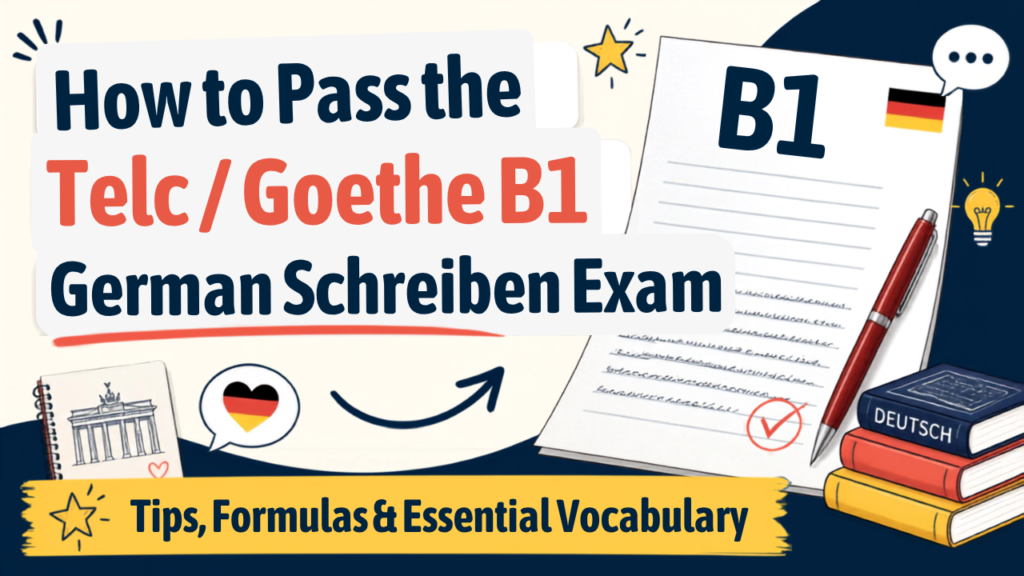
How to Pass the Telc / Goethe B1 German Schreiben Exam: Tips, Formulas & Essential Vocabulary

Sommer in Deutschland: Sonne, Eis und Biergärten ☀️🍦🍺
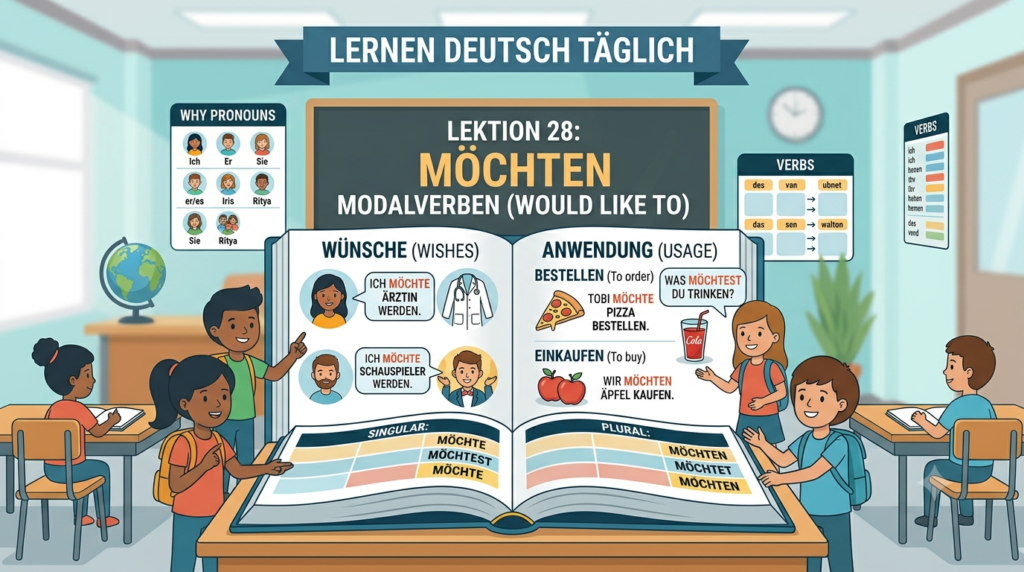
28. German language A1 : The Modal Verb “möchten” (Would Like To).
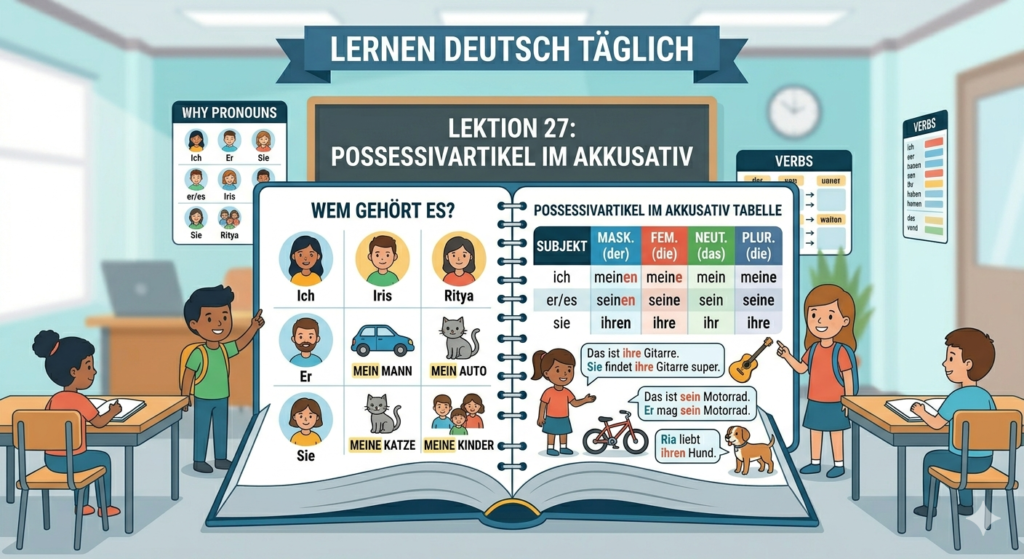
27. German language A1 : Possessive Articles in the Accusative Case (Possessivartikel im Akkusativ)

Leave a Reply