12. German language A1 : Haben (to have) & Sein (to be) in German
Some verbs are so essential that you’ll find them in almost every conversation. In German, two of these powerhouse verbs are:
👉 haben = to have
👉 sein = to be
Not only are they used daily, but they also play a key role as Hilfsverben (helping verbs) in many tenses. Think of them as the backbone of German sentences. Let’s break them down.
🔹 Haben — “To Have”
✅ Conjugation
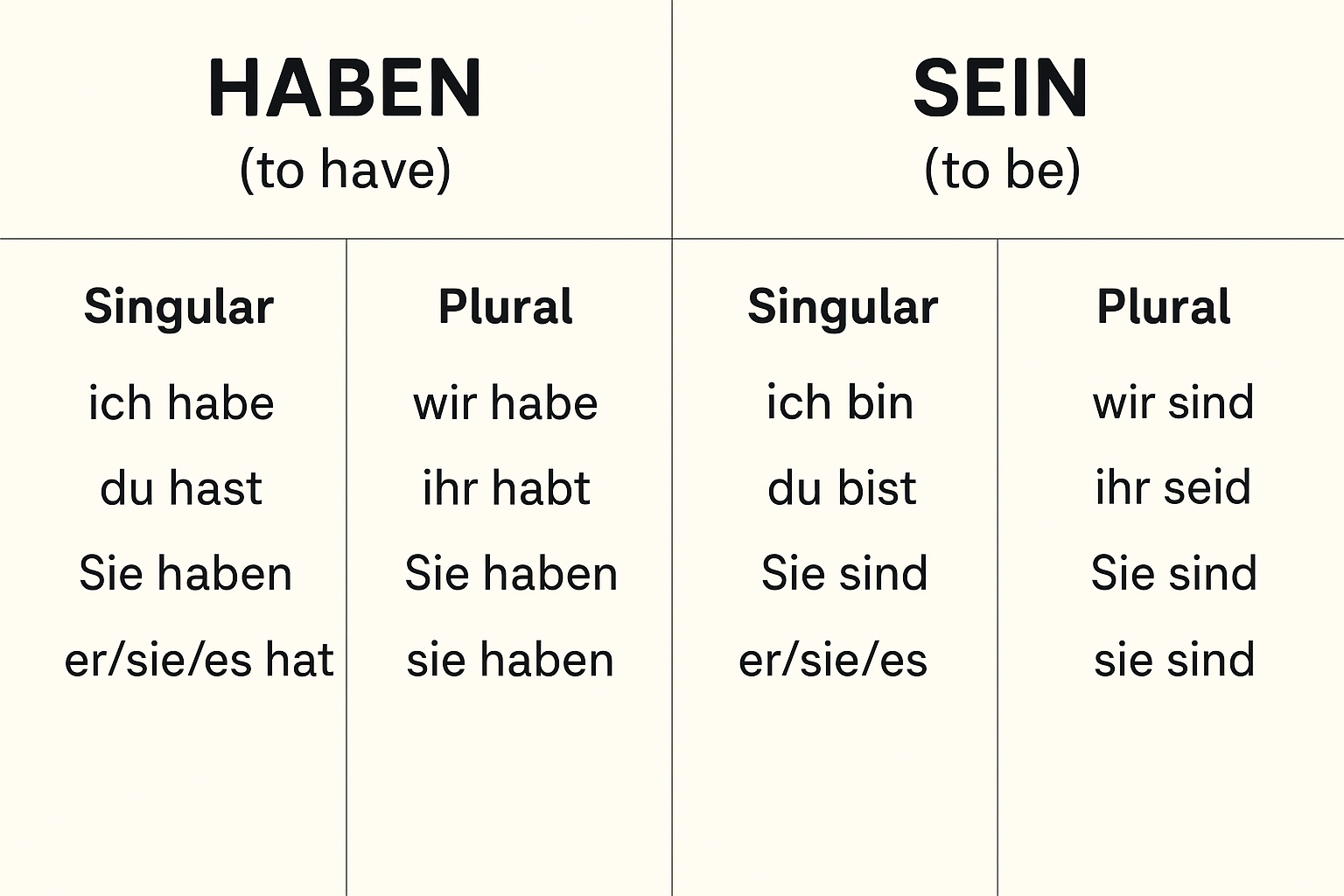
Singular
- ich habe — I have
- du hast — you have (informal)
- Sie haben — you have (formal)
- er/sie/es hat — he/she/it has
Plural
- wir haben — we have
- ihr habt — you all have (informal)
- Sie haben — you all have (formal)
- sie haben — they have
🗣 Examples in Action
- Ich habe ein Haus. → I have a house.
- Hast du eine Freundin? → Do you have a girlfriend?
- Wir haben ein Auto. → We have a car.
- Habt ihr Kinder? → Do you all have children?
- Frau Schmidt, haben Sie einen Moment? → Mrs. Schmidt, do you have a moment?
- Er hat keine Zeit. → He has no time.
- Maria hat eine Tochter. → Maria has a daughter.
- Meine Eltern haben einen Hund. → My parents have a dog.
👉 Notice how hast and hat change depending on the subject — these forms don’t follow the regular patterns you’ll see later, so it’s worth practicing until they feel natural.
🔹 Sein — “To Be”
✅ Conjugation
Singular
- ich bin — I am
- du bist — you are (informal)
- Sie sind — you are (formal)
- er/sie/es ist — he/she/it is
Plural
- wir sind — we are
- ihr seid — you all are (informal)
- Sie sind — you all are (formal)
- sie sind — they are
🗣 Examples in Action
- Ich bin 23 Jahre alt. → I am 23 years old.
- Bist du verliebt? → Are you in love?
- Wir sind glücklich. → We are happy.
- Seid ihr glücklich? → Are you all happy?
- Frau Schmidt, sind Sie zu Hause? → Mrs. Schmidt, are you at home?
- Sabine ist Lehrerin. → Sabine is a teacher.
- Meine Nachbarn sind sehr nett. → My neighbors are very nice.
👉 Just like in English (I am vs. she is), German forms of sein shift depending on who’s doing the action.
🧠 Learning Tip: Pay Attention to Irregularity
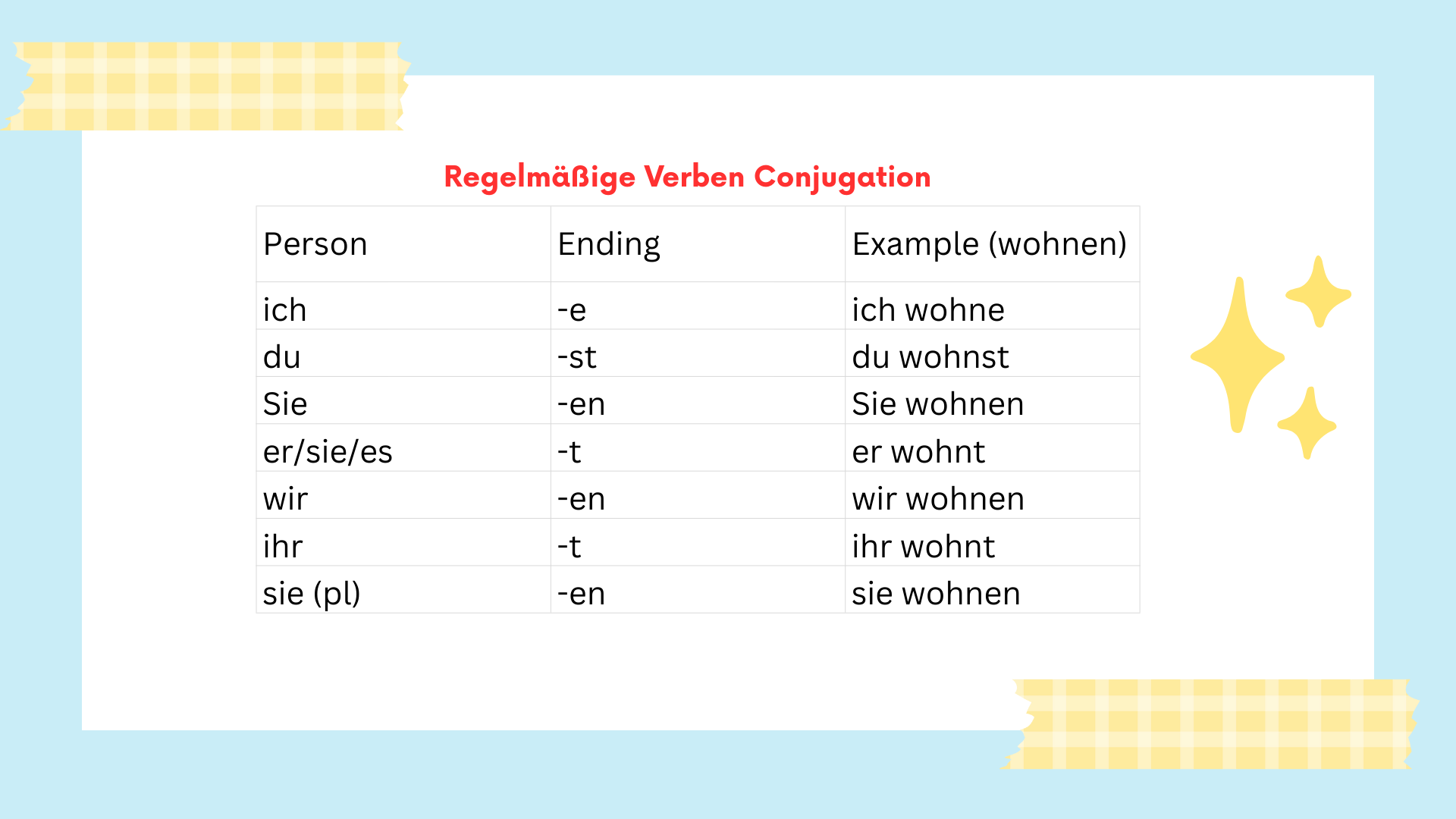
Both haben and sein are irregular verbs, which means they don’t follow the regular conjugation patterns you’ll see with most other verbs. That’s why they’re taught so early — you simply have to memorize them.
The good news? Once you master these two, you’ll not only boost your vocabulary but also unlock the ability to form compound tenses (like the present perfect).
🚀 What’s Next?
Now that you know how to use haben and sein in their basic forms, the next step is to bring them into conversations and questions. With just these two verbs, you can already talk about:
- Your age
- Your possessions
- Your job
- Your family
- Your state of being (happy, tired, at home, busy, etc.)
✨ Coming up: We’ll put these verbs into real-life dialogues so you can start sounding natural and fluent in everyday German.









Leave a Reply