8. German language A1 : Wie geht’s – How are you? in German
Today, we’ll go step-by-step through common ways to ask and answer How are you? in German, plus some bonus expressions to make your replies sound more natural.
1. Asking “How are you?” in German
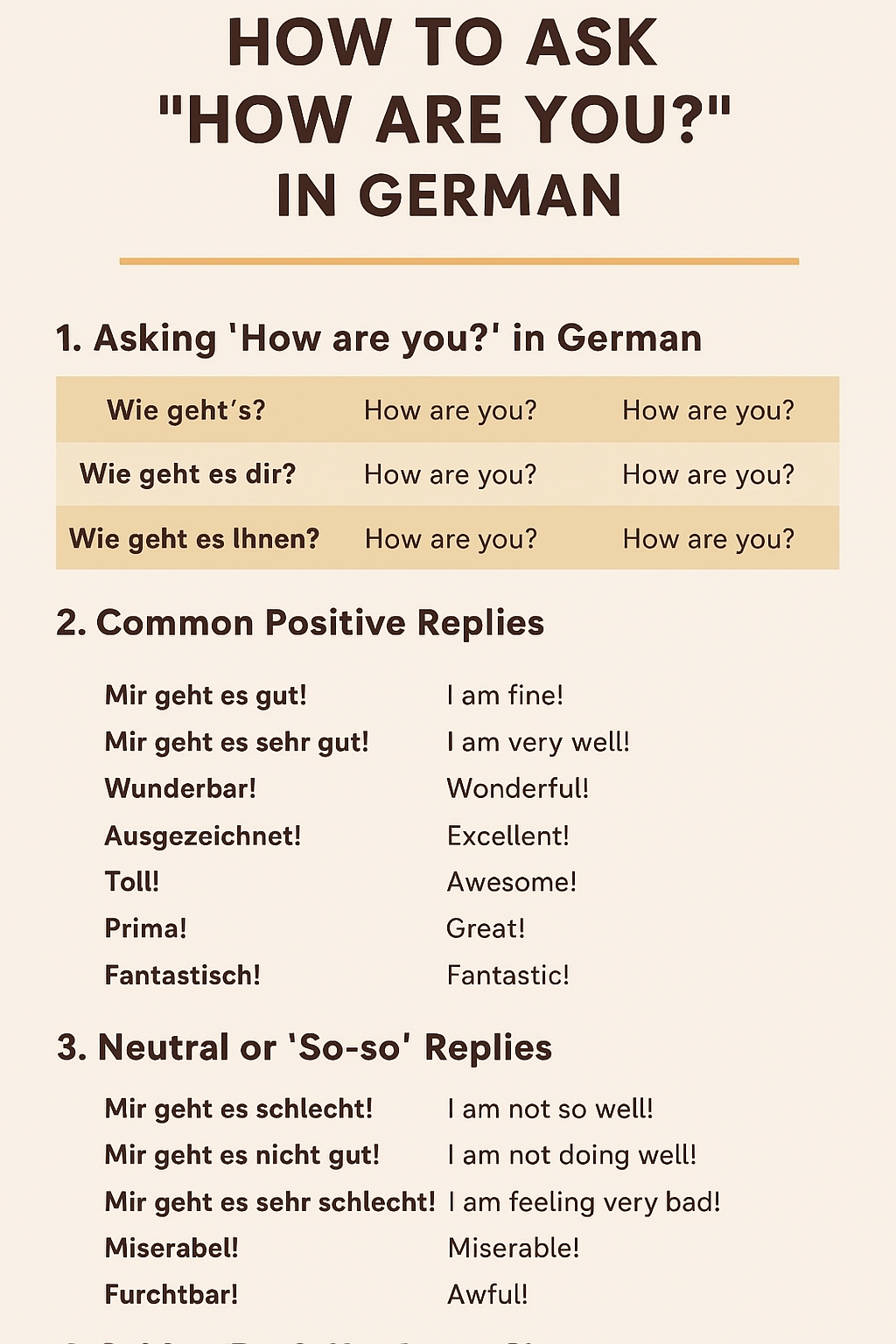
Informal
Used with friends, family, or people your own age.
- Wie geht’s? — How are you?
(Short for “Wie geht es dir?” — literally: How goes it to you?) - Wie geht es dir? — How are you? (informal, slightly more formal than “Wie geht’s?”)
Formal
Used with strangers, older people, colleagues, or in professional settings.
- Wie geht es Ihnen? — How are you? (formal)
Tip: In German, pronouns change with formality. Ihnen is the polite “you” form.
2. Common Positive Replies
When someone asks how you’re doing, here are several ways to answer if you’re feeling good:
- Mir geht es gut! — I am fine!
- Mir geht es sehr gut! — I am very well!
- Wunderbar! — Wonderful!
- Ausgezeichnet! — Excellent!
- Toll! — Awesome!
- Prima! — Great!
- Fantastisch! — Fantastic!
3. Neutral or “So-so” Replies
Sometimes you’re not great, but you’re not terrible either:
- Es geht! — Not too bad! (Literally: It goes!)
4. Negative Replies
If you’re not feeling your best, here’s how to say so:
- Mir geht es schlecht! — I am not so well!
- Mir geht es nicht gut! — I am not doing well!
- Mir geht es sehr schlecht! — I am feeling very bad!
- Miserabel! — Miserable!
- Furchtbar! — Awful!
5. Adding Details
Sometimes you want to explain why you feel a certain way:
- Ich bin müde. — I am tired.
- Ich bin krank. — I am unwell.
6. Asking Back “And you?”
After you answer, it’s polite to ask the other person how they are:
- Und Ihnen? — And you? (formal)
- Und dir? — And you? (informal)
7. Short Polite Responses
- Auch gut, danke! — Also good, thanks!
Example Mini-Conversations
Formal
- A: Guten Tag, Frau Müller. Wie geht es Ihnen?
(Good day, Mrs. Müller. How are you?) - B: Mir geht es sehr gut, danke! Und Ihnen?
(I am very well, thank you! And you?)
Informal
- A: Hallo, Anna! Wie geht’s?
(Hi, Anna! How are you?) - B: Es geht. Ich bin ein bisschen müde. Und dir?
(Not too bad. I am a little tired. And you?)
Grammar Tip: “Mir geht es…”
The phrase Mir geht es… literally means “To me, it goes…” This is why we use the dative case (mir) rather than ich.
we will learn accusative and dative case in detail.
for refrence : Accusative and dative in german
Your Turn — Practice!
Try answering the following question in both formal and informal ways:
Wie geht’s? / Wie geht es Ihnen?
- Answer positively: Mir geht es prima!
- Answer neutrally: Es geht.
- Answer negatively: Mir geht es nicht gut.
Viel Erfolg beim Lernen! (Good luck learning!)
If you find this lesson useful, follow for more daily German learning tips.

Mastering German Dating Phrases
German at the Doctor: Essential Phrases, Vocabulary, and Tips

Top German vocabulary for traveling.
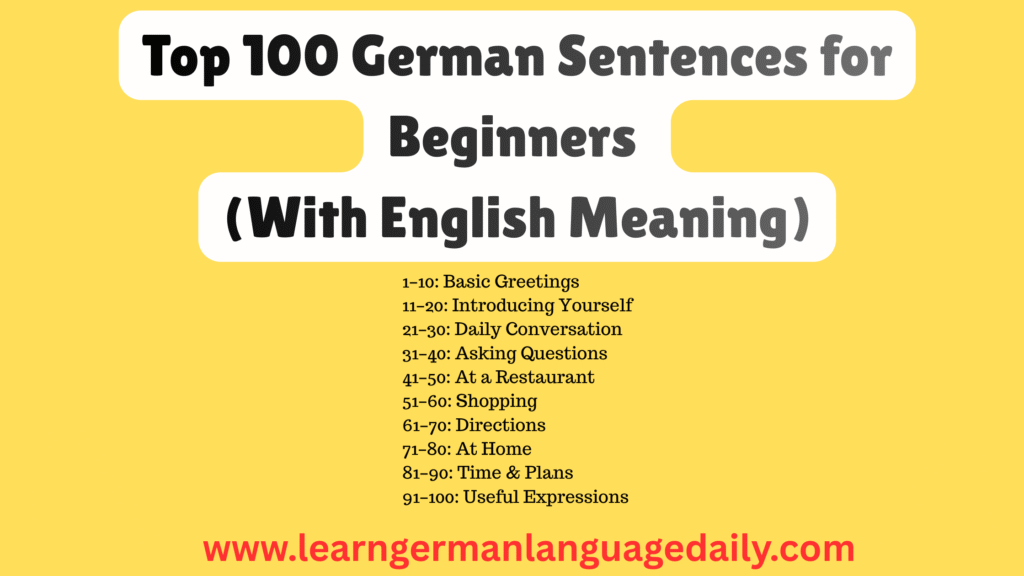
100 German Sentences for Beginners (With English Meaning)

25. German language A1: The Family (Die Familie) in German.

Leave a Reply