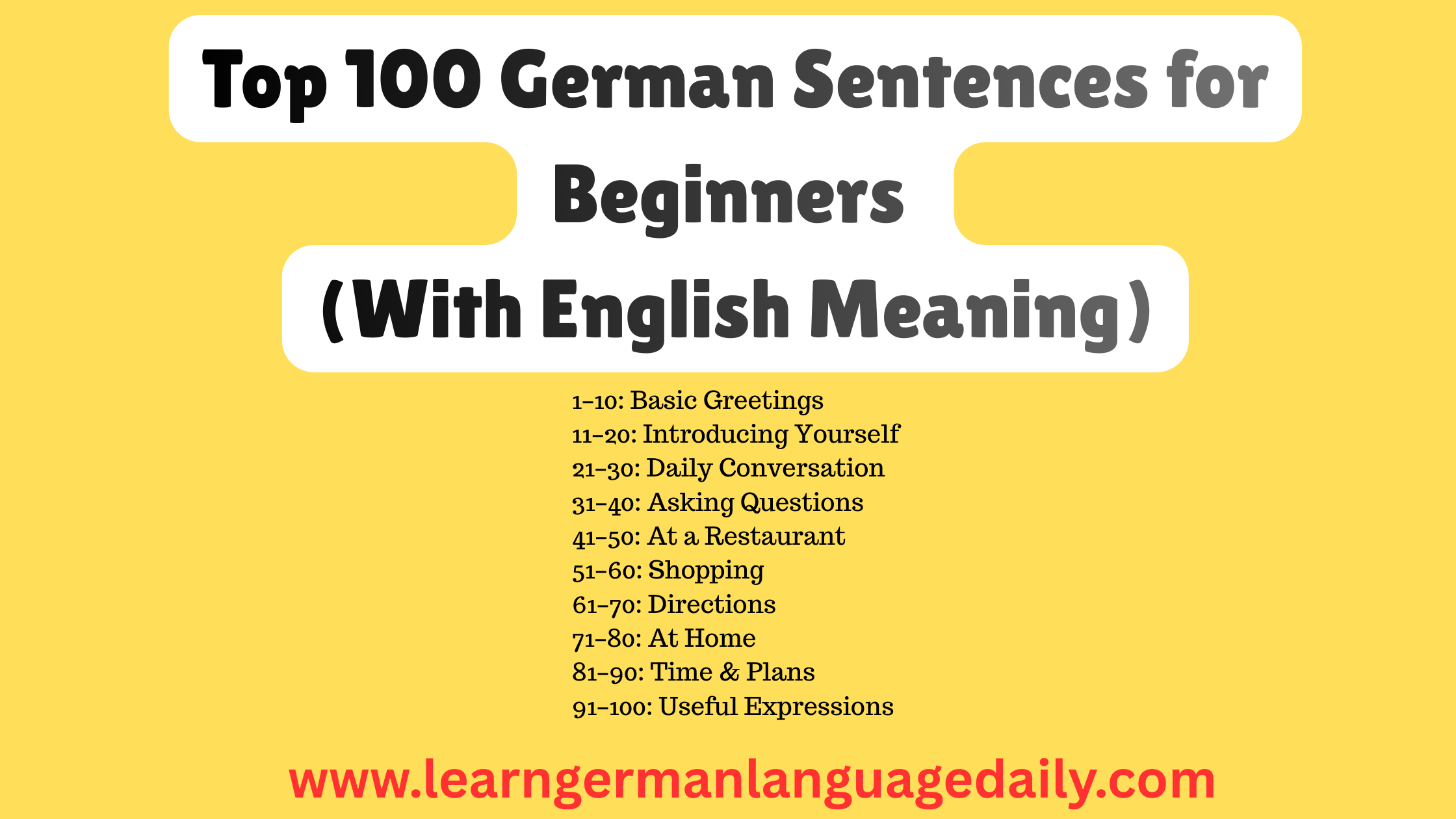
100 German Sentences for Beginners (With English Meaning)
Learning German becomes much easier when you practice simple sentences every day. Here are 100 useful German sentences that beginners can use in daily life.
1–10: Basic Greetings
- Hallo! – Hello!
- Guten Morgen! – Good morning!
- Guten Tag! – Good day!
- Guten Abend! – Good evening!
- Gute Nacht! – Good night!
- Wie geht es dir? – How are you?
- Mir geht es gut. – I am fine.
- Und dir? – And you?
- Schön dich zu sehen. – Nice to see you.
- Willkommen! – Welcome!
11–20: Introducing Yourself
- Ich heiße Anna. – My name is Anna.
- Wie heißt du? – What is your name?
- Ich komme aus Deutschland. – I come from Germany.
- Woher kommst du? – Where are you from?
- Ich bin Student. – I am a student.
- Ich bin Lehrer. – I am a teacher.
- Ich bin 25 Jahre alt. – I am 25 years old.
- Ich lerne Deutsch. – I am learning German.
- Ich spreche ein bisschen Deutsch. – I speak a little German.
- Freut mich, dich kennenzulernen. – Nice to meet you.
21–30: Daily Conversation
- Was machst du? – What are you doing?
- Ich arbeite heute. – I work today.
- Ich habe frei. – I am off today.
- Ich bin müde. – I am tired.
- Ich bin glücklich. – I am happy.
- Ich habe Hunger. – I am hungry.
- Ich habe Durst. – I am thirsty.
- Ich gehe nach Hause. – I go home.
- Ich komme gleich. – I will come soon.
- Warte bitte. – Please wait.
31–40: Asking Questions
- Was ist das? – What is that?
- Wo ist die Toilette? – Where is the toilet?
- Wo wohnst du? – Where do you live?
- Wann kommst du? – When will you come?
- Warum lernst du Deutsch? – Why are you learning German?
- Kannst du mir helfen? – Can you help me?
- Verstehst du mich? – Do you understand me?
- Kannst du das wiederholen? – Can you repeat that?
- Wie viel kostet das? – How much does that cost?
- Ist das richtig? – Is that correct?
41–50: At a Restaurant
- Ich möchte bestellen. – I would like to order.
- Die Speisekarte, bitte. – The menu, please.
- Ich nehme einen Kaffee. – I will take a coffee.
- Ich hätte gern Wasser. – I would like water.
- Das schmeckt gut. – This tastes good.
- Die Rechnung, bitte. – The bill, please.
- Kann ich mit Karte bezahlen? – Can I pay by card?
- Noch etwas? – Anything else?
- Das ist alles. – That is all.
- Vielen Dank! – Thank you very much!
51–60: Shopping
- Ich möchte das kaufen. – I want to buy this.
- Haben Sie das in größer? – Do you have this bigger?
- Haben Sie das in kleiner? – Do you have this smaller?
- Das ist zu teuer. – That is too expensive.
- Haben Sie Rabatt? – Do you have a discount?
- Ich schaue nur. – I am just looking.
- Das gefällt mir. – I like that.
- Das gefällt mir nicht. – I don’t like that.
- Ich nehme es. – I’ll take it.
- Danke schön. – Thank you.
61–70: Directions
- Wo ist der Bahnhof? – Where is the train station?
- Wo ist die Bushaltestelle? – Where is the bus stop?
- Gehen Sie geradeaus. – Go straight ahead.
- Biegen Sie links ab. – Turn left.
- Biegen Sie rechts ab. – Turn right.
- Es ist nicht weit. – It is not far.
- Es ist weit. – It is far.
- Ich habe mich verlaufen. – I am lost.
- Können Sie mir den Weg zeigen? – Can you show me the way?
- Danke für Ihre Hilfe. – Thanks for your help.
71–80: At Home
- Ich bin zu Hause. – I am at home.
- Ich koche Abendessen. – I cook dinner.
- Ich sehe fern. – I watch TV.
- Ich lese ein Buch. – I read a book.
- Ich höre Musik. – I listen to music.
- Ich schlafe jetzt. – I sleep now.
- Ich räume auf. – I tidy up.
- Ich putze das Haus. – I clean the house.
- Ich arbeite am Computer. – I work on the computer.
- Ich entspanne mich. – I relax.
81–90: Time & Plans
- Heute ist Montag. – Today is Monday.
- Morgen arbeite ich. – Tomorrow I work.
- Am Wochenende habe ich frei. – I am free on the weekend.
- Lass uns treffen. – Let’s meet.
- Wann hast du Zeit? – When do you have time?
- Ich komme um acht Uhr. – I come at eight o’clock.
- Ich bin pünktlich. – I am punctual.
- Ich bin spät. – I am late.
- Bis später! – See you later!
- Bis morgen! – See you tomorrow!
91–100: Useful Expressions
- Ja. – Yes.
- Nein. – No.
- Vielleicht. – Maybe.
- Natürlich. – Of course.
- Kein Problem. – No problem.
- Entschuldigung. – Excuse me.
- Es tut mir leid. – I am sorry.
- Alles klar. – All right.
- Gute Idee! – Good idea!
- Viel Glück! – Good luck!
✅ Tip for learners:
Try to read these sentences aloud every day and use them in real conversations. Repetition will quickly improve your German speaking skills.
German Vocabulary for Everyday Life: 300+ Essential German Words and Phrases
Learning German vocabulary is much easier when you learn words that you actually use in…
How to Pass the Telc / Goethe B1 German Schreiben Exam: Tips, Formulas & Essential Vocabulary
The B1 German writing exam (Schreiben) tests your ability to communicate clearly in written German…

Sommer in Deutschland: Sonne, Eis und Biergärten ☀️🍦🍺
Hallo liebe Deutschlerner! Der Sommer ist da. In Deutschland ist der Sommer eine wunderschöne Jahreszeit….
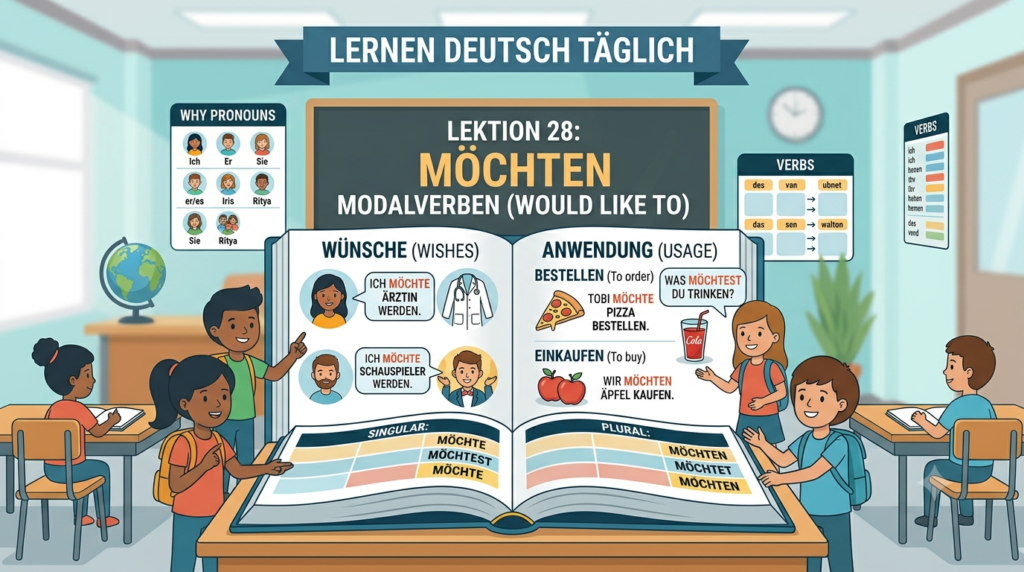
28. German language A1 : The Modal Verb “möchten” (Would Like To).
we are exploring a verb that will instantly make you sound incredibly polite and help…
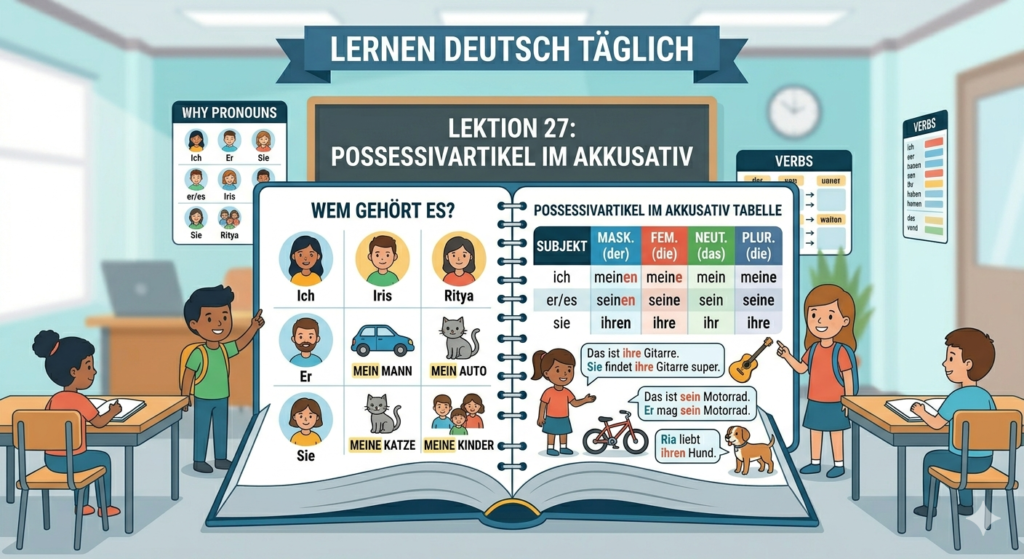
27. German language A1 : Possessive Articles in the Accusative Case (Possessivartikel im Akkusativ)
Today, we are taking the next step in your German learning journey: Possessive Articles in…
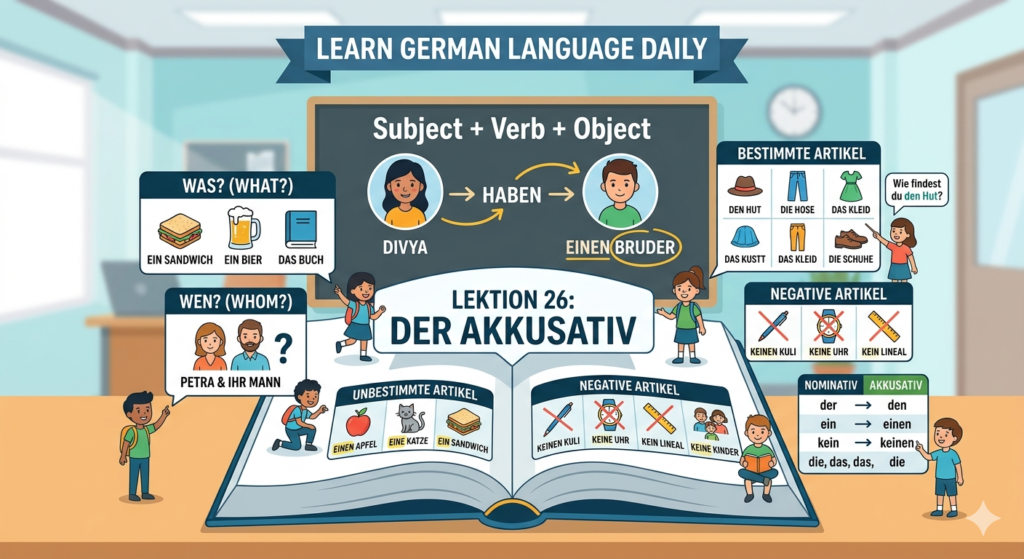
26. German language A1 : Mastering the Accusative Case (Akkusativ) in German
Mastering Accusatibe case (Akkusativ) in German.
Today, we are diving into one of the most important…

Leave a Reply