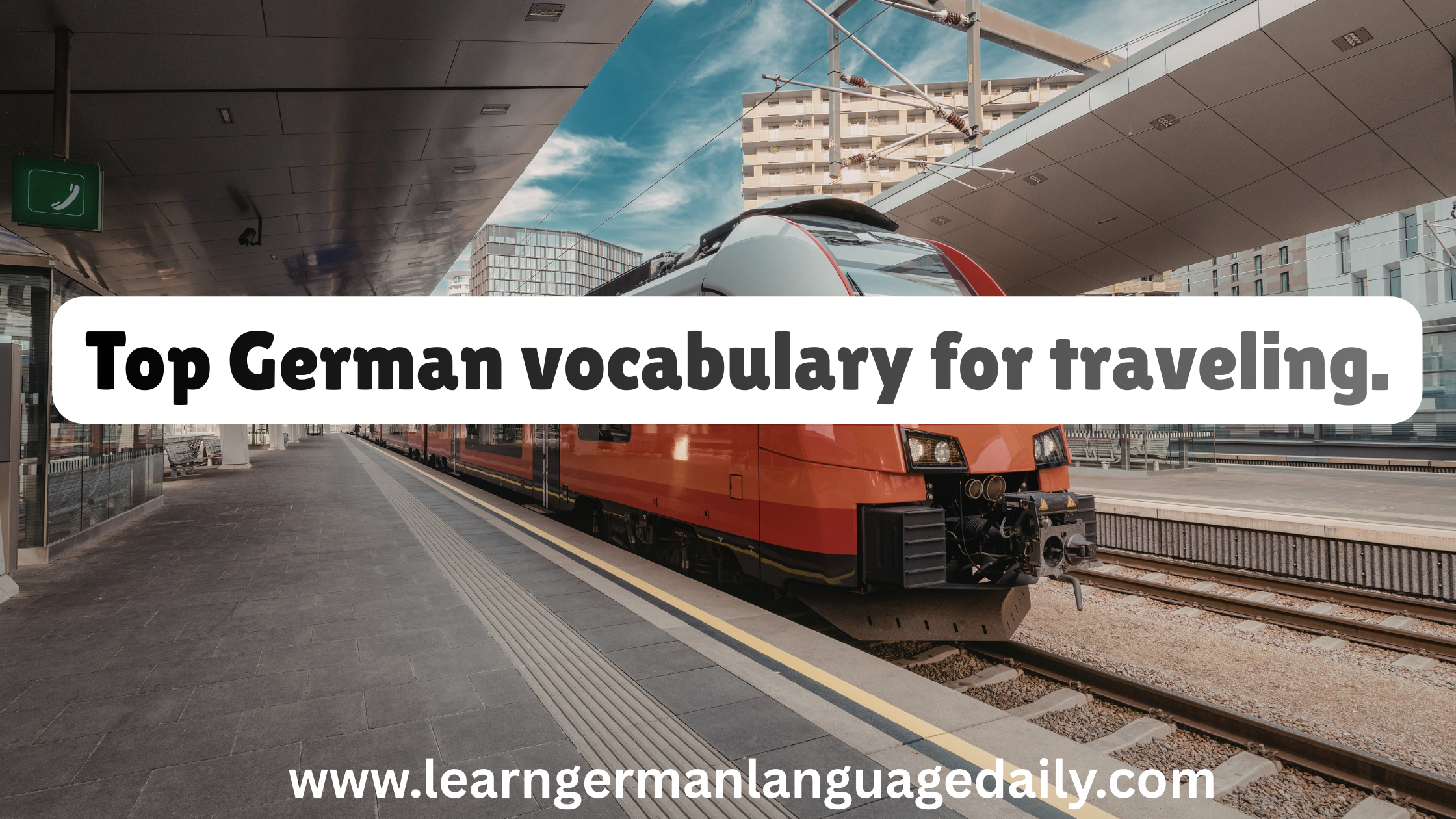
Top German vocabulary for traveling.
Germany is famous for its efficient transport system and beautiful cities. Whether you’re taking the train, staying at a hotel, or exploring restaurants, knowing some basic German vocabulary can make your trip smoother and more enjoyable. From navigating stations like Berlin Hauptbahnhof to ordering food, this guide covers everything a traveler needs.
1. Understanding German Train Stations
The German word for train station is “Bahnhof.” Large stations often include shops, restaurants, and service counters. Key areas to know:
- Gleis – Platform / Track
- Bahnsteig – Platform area
- Fahrkartenautomat – Ticket machine
- Reisezentrum – Customer service center
- Ausgang – Exit
- Eingang – Entrance
Major hubs like Frankfurt (Main) Hauptbahnhof are busy, so learning these terms will help you navigate easily.
2. Buying Train Tickets in German 🎫
Tickets can be purchased at machines, counters, or via the DB Navigator app. Common phrases include:
- Ein Ticket nach Berlin, bitte. → One ticket to Berlin, please.
- Hin und zurück. → Round trip.
- Nur einfache Fahrt. → One-way ticket.
- Wann fährt der nächste Zug? → When does the next train leave?
3. Reading the Departure Board 📺
Departure boards display Abfahrt (departures) and Ankunft (arrivals). Important terms:
| German | English |
|---|---|
| Zeit | Time |
| Zug | Train number/type |
| Richtung | Direction / Destination |
| Gleis | Platform |
| Verspätung | Delay |
Example:
ICE 789 – München – Gleis 7 – 10 Min Verspätung
→ The InterCity Express to Munich leaves from platform 7 with a 10-minute delay.
4. Asking for Help at the Station 🙋
Useful phrases:
- Entschuldigung, wo ist Gleis 5? → Excuse me, where is platform 5?
- Fährt dieser Zug nach Köln? → Does this train go to Cologne?
- Muss ich umsteigen? → Do I need to transfer?
- Wie lange dauert die Fahrt? → How long is the trip?
5. Essential Travel Vocabulary
Train & Station Vocabulary 🚄
| German | English |
|---|---|
| Reise | Trip / Travel |
| der Zug | Train |
| der Bahnhof | Train station |
| die Fahrkarte | Ticket |
| der Fahrplan | Schedule |
| die Abfahrt | Departure |
| die Ankunft | Arrival |
| das Gleis | Platform / Track |
| die Verspätung | Delay |
| der Anschluss | Connection |
Airport Vocabulary ✈️
| German | English |
|---|---|
| der Flughafen | Airport |
| der Flug | Flight |
| das Gepäck | Luggage |
| der Reisepass | Passport |
| der Check-in | Check-in |
| die Sicherheitskontrolle | Security check |
| das Boarding | Boarding |
| das Gate | Gate |
Hotel Vocabulary 🏨
| German | English |
|---|---|
| das Hotel | Hotel |
| das Zimmer | Room |
| die Reservierung | Reservation |
| der Schlüssel | Key |
| der Ausweis | ID |
| eine Nacht | One night |
| das Frühstück | Breakfast |
| auschecken | Check out |
Restaurant Vocabulary 🍽️
| German | English |
|---|---|
| das Restaurant | Restaurant |
| die Speisekarte | Menu |
| das Getränk | Drink |
| das Wasser | Water |
| die Rechnung | Bill |
| bezahlen | To pay |
| bestellen | To order |
Directions & Navigation 🧭
| German | English |
|---|---|
| links | left |
| rechts | right |
| geradeaus | straight ahead |
| hier | here |
| dort | there |
| die Straße | street |
Example: Gehen Sie geradeaus und dann links. → Go straight ahead and then left.
Useful Travel Phrases 🗣️
- Entschuldigung → Excuse me
- Wie viel kostet das? → How much does it cost?
- Sprechen Sie Englisch? → Do you speak English?
- Ich brauche Hilfe. → I need help
- Danke / Bitte → Thank you / Please or You’re welcome
6. Tips for First-Time Travelers in Germany
✔ Arrive 10–15 minutes early to find your platform.
✔ Check the departure board for platform changes.
✔ Use the DB Navigator app for real-time updates.
✔ Look for platform sections (A, B, C) to find your train carriage.
✔ Keep your ticket ready for inspection.
✔ Learning a few German words shows politeness and opens doors to friendlier interactions.
Conclusion
Traveling in Germany by train is efficient, comfortable, and enjoyable. With essential German vocabulary, phrases, and knowledge of train station layouts, you can confidently navigate cities like Berlin, Hamburg, and Munich. From buying tickets to ordering in restaurants, understanding basic German makes your journey smoother and more rewarding.r Munich, but using simple German words shows politeness and often leads to friendlier interactions.
German Vocabulary for Everyday Life: 300+ Essential German Words and Phrases
Learning German vocabulary is much easier when you learn words that you actually use in…
How to Pass the Telc / Goethe B1 German Schreiben Exam: Tips, Formulas & Essential Vocabulary

Sommer in Deutschland: Sonne, Eis und Biergärten ☀️🍦🍺
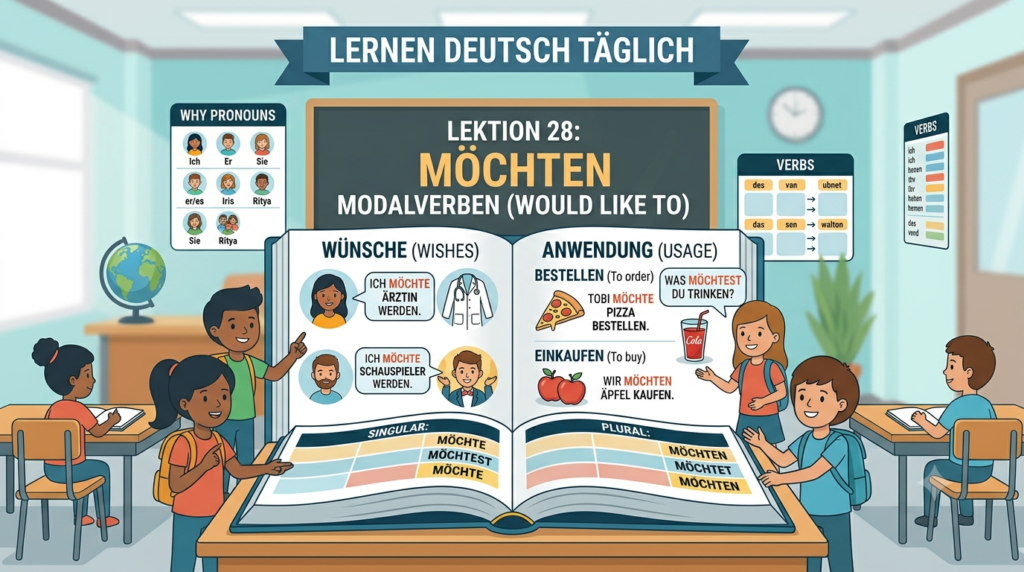
28. German language A1 : The Modal Verb “möchten” (Would Like To).
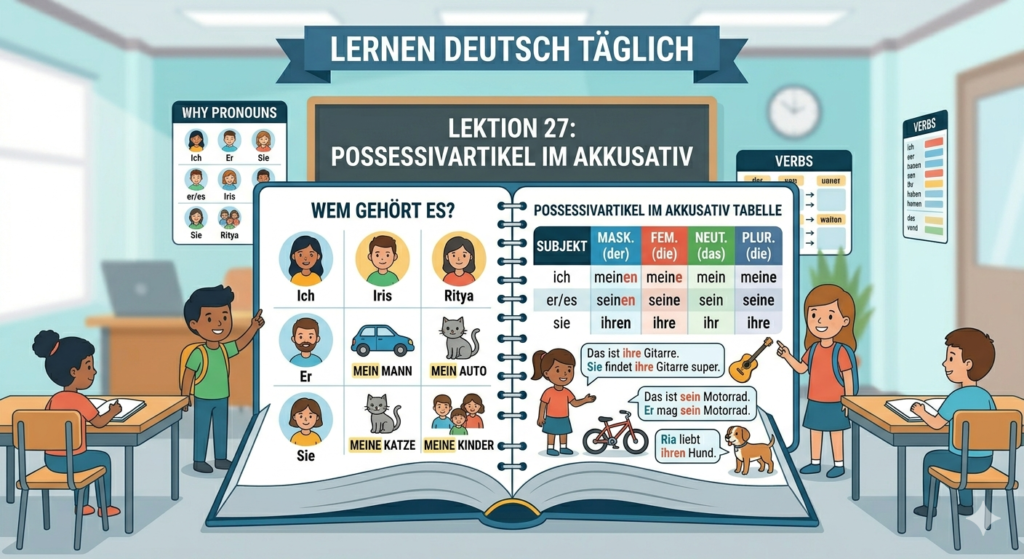
27. German language A1 : Possessive Articles in the Accusative Case (Possessivartikel im Akkusativ)

Leave a Reply