German at the Doctor: Essential Phrases, Vocabulary, and Tips
Visiting a doctor in Germany can feel intimidating if you’re not fluent in German. From explaining symptoms to understanding prescriptions, being prepared with the right vocabulary and phrases can make the experience much smoother. Here’s a detailed guide to help you communicate effectively.
1. Making an Appointment
Before you visit, you often need to call and make an appointment.
Useful sentences:
- Ich möchte einen Termin beim Arzt vereinbaren. – I would like to make an appointment with the doctor.
- Haben Sie morgen einen freien Termin? – Do you have an available appointment tomorrow?
- Ich brauche einen Termin wegen Kopfschmerzen. – I need an appointment because of a headache.
Vocabulary:
- der Termin – appointment
- der Arzt / die Ärztin – doctor (male/female)
- die Praxis – medical practice/clinic
- die Sprechstunde – consultation hours
2. At the Reception
When you arrive at the clinic, you’ll usually check in at the reception.
Useful sentences:
- Guten Tag, ich habe einen Termin um 10 Uhr. – Hello, I have an appointment at 10 o’clock.
- Ich bin hier für die Sprechstunde bei Frau Dr. Müller. – I am here for the consultation with Dr. Müller.
- Brauche ich etwas mitzubringen? – Do I need to bring anything?
Vocabulary:
- die Anmeldung – reception/registration
- die Versichertenkarte – health insurance card
- der Wartebereich – waiting area
- das Formular – form
3. Describing Symptoms
Clearly explaining your symptoms is essential.
Useful sentences:
- Ich habe seit drei Tagen Fieber. – I have had a fever for three days.
- Ich habe starke Kopfschmerzen. – I have a severe headache.
- Mir ist schwindelig und ich fühle mich schwach. – I feel dizzy and weak.
- Ich habe Husten und Schnupfen. – I have a cough and a runny nose.
Vocabulary:
- das Symptom – symptom
- der Schmerz – pain
- die Übelkeit – nausea
- die Erkältung – cold
- die Grippe – flu
4. Medical Questions and Examinations
Doctors often ask about your health history and lifestyle.
Common phrases from doctors:
- Wo genau tut es weh? – Where exactly does it hurt?
- Seit wann haben Sie diese Symptome? – Since when have you had these symptoms?
- Nehmen Sie Medikamente? – Are you taking any medications?
- Haben Sie Allergien? – Do you have any allergies?
Useful responses:
- Der Schmerz ist hier, im Rücken. – The pain is here, in my back.
- Ich nehme regelmäßig Blutdruckmedikamente. – I regularly take blood pressure medication.
- Ich habe keine Allergien. – I have no allergies.
Vocabulary:
- die Untersuchung – examination
- die Diagnose – diagnosis
- das Medikament – medication
- die Nebenwirkung – side effect
- die Verschreibung – prescription
5. At the Pharmacy
If the doctor gives you a prescription, you’ll take it to a pharmacy (Apotheke).
Useful sentences:
- Ich habe ein Rezept von meinem Arzt. – I have a prescription from my doctor.
- Wie soll ich das Medikament einnehmen? – How should I take this medication?
- Gibt es Nebenwirkungen? – Are there any side effects?
Vocabulary:
- die Apotheke – pharmacy
- das Rezept – prescription
- die Tablette – tablet/pill
- die Salbe – ointment
- die Tropfen – drops
6. Tips for Communicating Effectively
- Speak slowly and clearly – German doctors are used to non-native speakers, but clarity helps.
- Bring any medical documents – previous prescriptions, vaccination records, or test results.
- Learn key verbs – schmerzen (to hurt), fühlen (to feel), nehmen (to take), untersuchen (to examine).
- Use simple phrases for emergencies – Hilfe! (Help!), Ich kann nicht atmen! (I can’t breathe!).
Quick Reference Mini-Glossary
| German | English |
|---|---|
| Arzt / Ärztin | Doctor (m/f) |
| Patient / Patientin | Patient (m/f) |
| Praxis | Clinic |
| Symptome | Symptoms |
| Schmerz | Pain |
| Fieber | Fever |
| Husten | Cough |
| Rezept | Prescription |
| Apotheke | Pharmacy |
| Medikament | Medicine |
💡 Pro Tip: Even if your German isn’t perfect, doctors appreciate honesty and clear communication. Using gestures or writing down symptoms can help bridge gaps.

German Vocabulary for Everyday Life: 300+ Essential German Words and Phrases
Learning German vocabulary is much easier when you learn words that you actually use in…
How to Pass the Telc / Goethe B1 German Schreiben Exam: Tips, Formulas & Essential Vocabulary

Sommer in Deutschland: Sonne, Eis und Biergärten ☀️🍦🍺
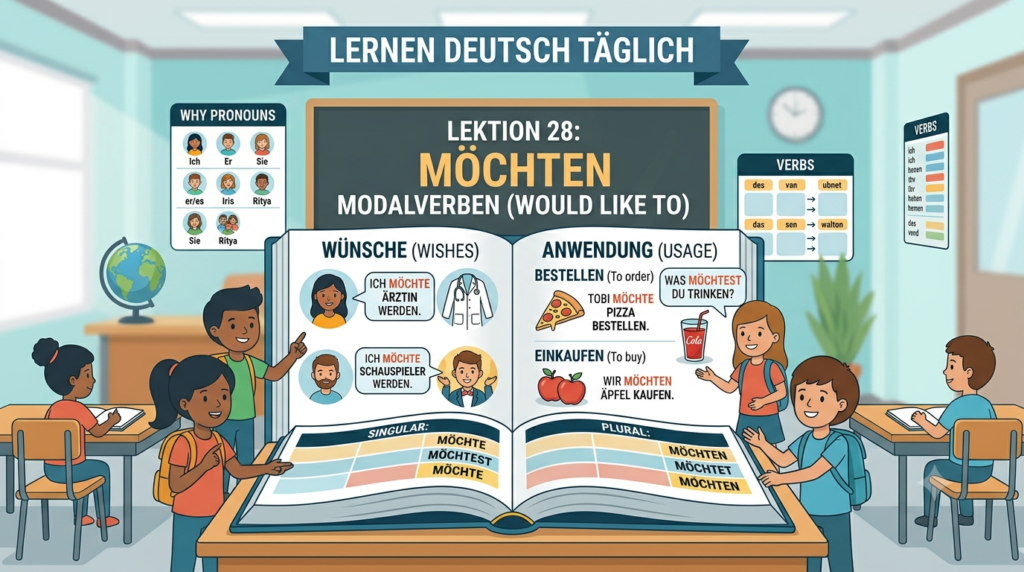
28. German language A1 : The Modal Verb “möchten” (Would Like To).
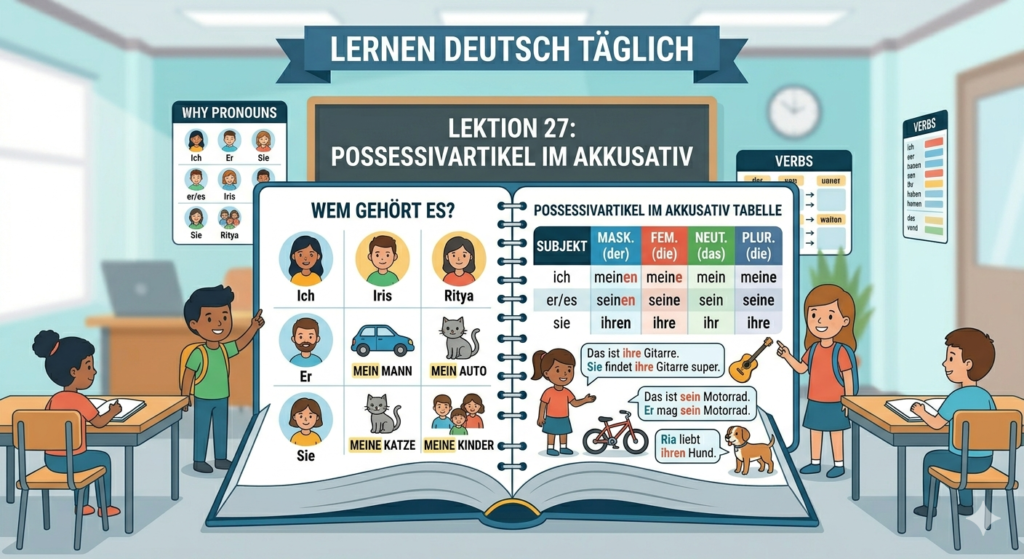
27. German language A1 : Possessive Articles in the Accusative Case (Possessivartikel im Akkusativ)

Leave a Reply