10. German language A1 : Pronouns & Verb Conjugation
When learning German, one of the very first steps is to understand personal pronouns and how verb conjugation works. Unlike English, where verbs often stay the same, in German the verb ending changes depending on who is doing the action.
In today’s lesson, we’ll cover:
✅ Personal Pronouns: ich, du, Sie
✅ Verb endings based on the subject
✅ Conjugation of basic verbs: wohnen, kommen, heißen, sprechen
👤 Personal Pronouns: Who’s Talking?
German personal pronouns tell us who is performing the action.
| Pronoun | Meaning | Usage |
|---|---|---|
| ich | I | First person singular |
| du | you (informal) | Friends, family, people you know well |
| Sie | you (formal) | Polite/formal situations, strangers, authority figures |
👉 Important: Sie (formal “you”) is always written with a capital S.
🔄 How Verb Conjugation Works
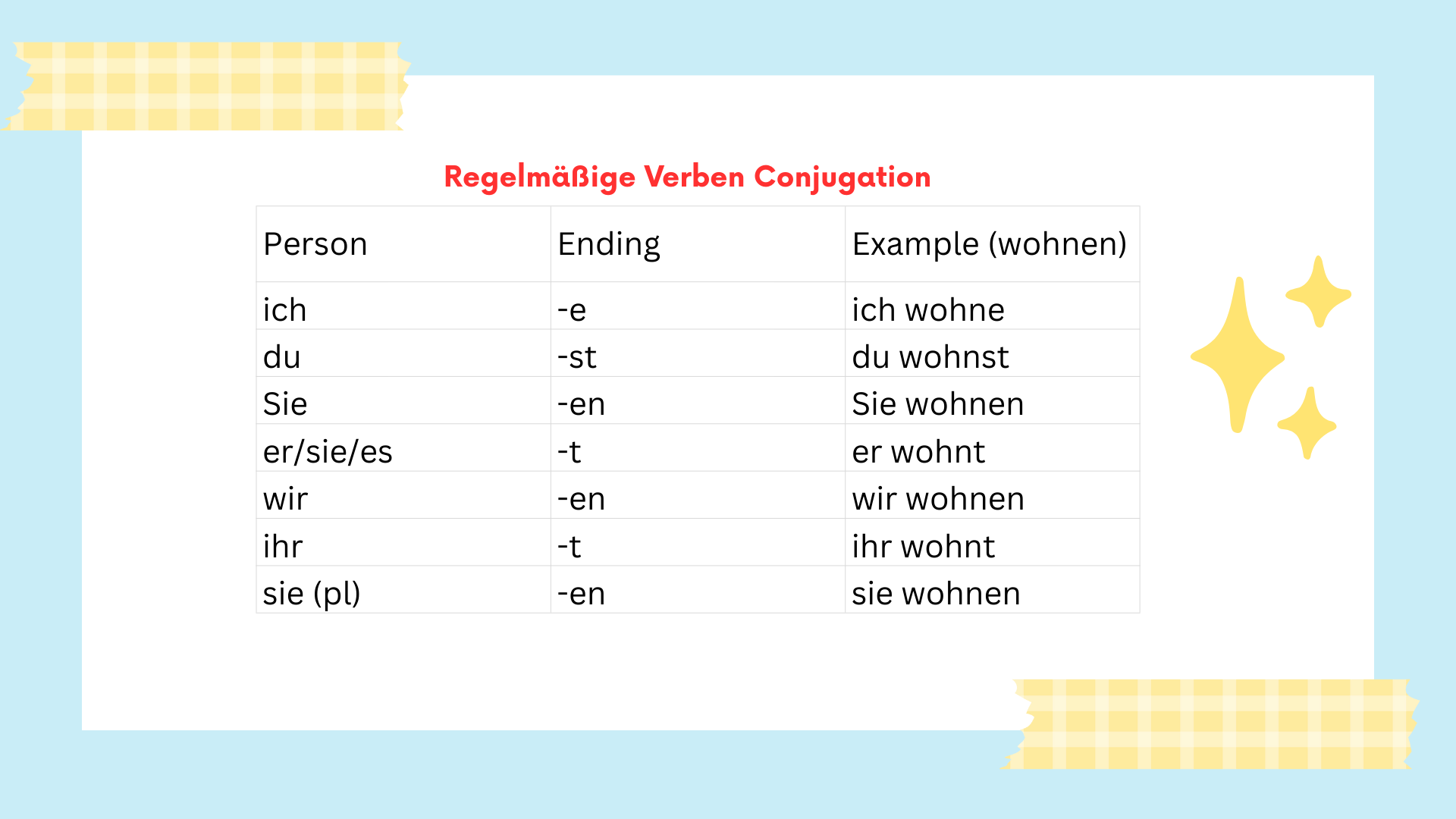
In German, verb endings change depending on the subject.
Here’s the basic pattern for regular verbs:
| Subject | Verb Ending | Example with wohnen (to live) |
|---|---|---|
| ich | -e | ich wohne |
| du | -st | du wohnst |
| Sie | -en | Sie wohnen |
🎯 Tip: First identify the subject, then apply the correct ending.
🏠 Verb Conjugation: wohnen (to live)
| Pronoun | Conjugation | Example Sentence |
|---|---|---|
| ich | wohne | Ich wohne in Berlin. (I live in Berlin.) |
| du | wohnst | Wo wohnst du? (Where do you live?) |
| Sie | wohnen | Wo wohnen Sie? (Where do you live? – formal) |
🌍 Verb Conjugation: kommen (to come)
| Pronoun | Conjugation | Example Sentence |
|---|---|---|
| ich | komme | Ich komme aus Indien. (I come from India.) |
| du | kommst | Woher kommst du? (Where are you from?) |
| Sie | kommen | Woher kommen Sie? (Where are you from? – formal) |
🧑💼 Verb Conjugation: heißen (to be called)
| Pronoun | Conjugation | Example Sentence |
|---|---|---|
| ich | heiße | Ich heiße Yogin. (My name is Yogin.) |
| du | heißt | Wie heißt du? (What’s your name?) |
| Sie | heißen | Wie heißen Sie? (What’s your name? – formal) |
🗣️ Verb Conjugation: sprechen (to speak)
⚡ This verb is slightly irregular for “du.”
| Pronoun | Conjugation | Example Sentence |
|---|---|---|
| ich | spreche | Ich spreche Deutsch. (I speak German.) |
| du | sprichst | Sprichst du Englisch? (Do you speak English?) |
| Sie | sprechen | Sprechen Sie Spanisch? (Do you speak Spanish? – formal) |
📝 Summary
- Always start with the subject (pronoun).
- Then, add the correct verb ending (-e, -st, -en).
- Remember that Sie (formal “you”) always uses the -en ending, just like they in German.
👉 These patterns form the foundation of German fluency. In upcoming lessons, we’ll look at irregular verbs, exceptions, and more useful expressions.
📚 Follow us for daily German lessons and let’s build fluency step by step!









Leave a Reply