21. German language A1 : Negative Articles in German (Kein)
In our last two lessons, we learned about:
- Bestimmte Artikel (Definite articles) → der, die, das
- Unbestimmte Artikel (Indefinite articles) → ein, eine
👉 Today, we will complete the picture with the Negative Artikel: kein, keine.
They are used when you want to say that something is not a particular thing.
What are Negative Articles?
- The negative article works like the indefinite article, but it negates the noun.
- You simply take ein/eine and add a k- in front:
- ein → kein
- eine → keine
Examples with Translations
1. Maskulin
Noun: der Kuli (pen), der Bleistift (pencil)
- Ist das ein Kuli?
(Is this a pen?) - Nein, das ist kein Kuli. Das ist ein Bleistift.
(No, this is not a pen. This is a pencil.)
2. Feminin
Noun: die Blume (flower), die Schokolade (chocolate)
- Ist das eine Blume?
(Is this a flower?) - Nein, das ist keine Blume. Das ist eine Schokolade.
(No, this is not a flower. This is a chocolate.)
3. Neutrum
Noun: das Buch (book), das Handy (mobile phone)
- Ist das ein Buch?
(Is this a book?) - Nein, das ist kein Buch. Das ist ein Handy.
(No, this is not a book. This is a mobile phone.)
4. Plural
Noun: die Sterne (stars), die Ballons (balloons)
- Sind das Sterne?
(Are these stars?) - Nein, das sind keine Sterne. Das sind Ballons.
(No, these are not stars. These are balloons.)
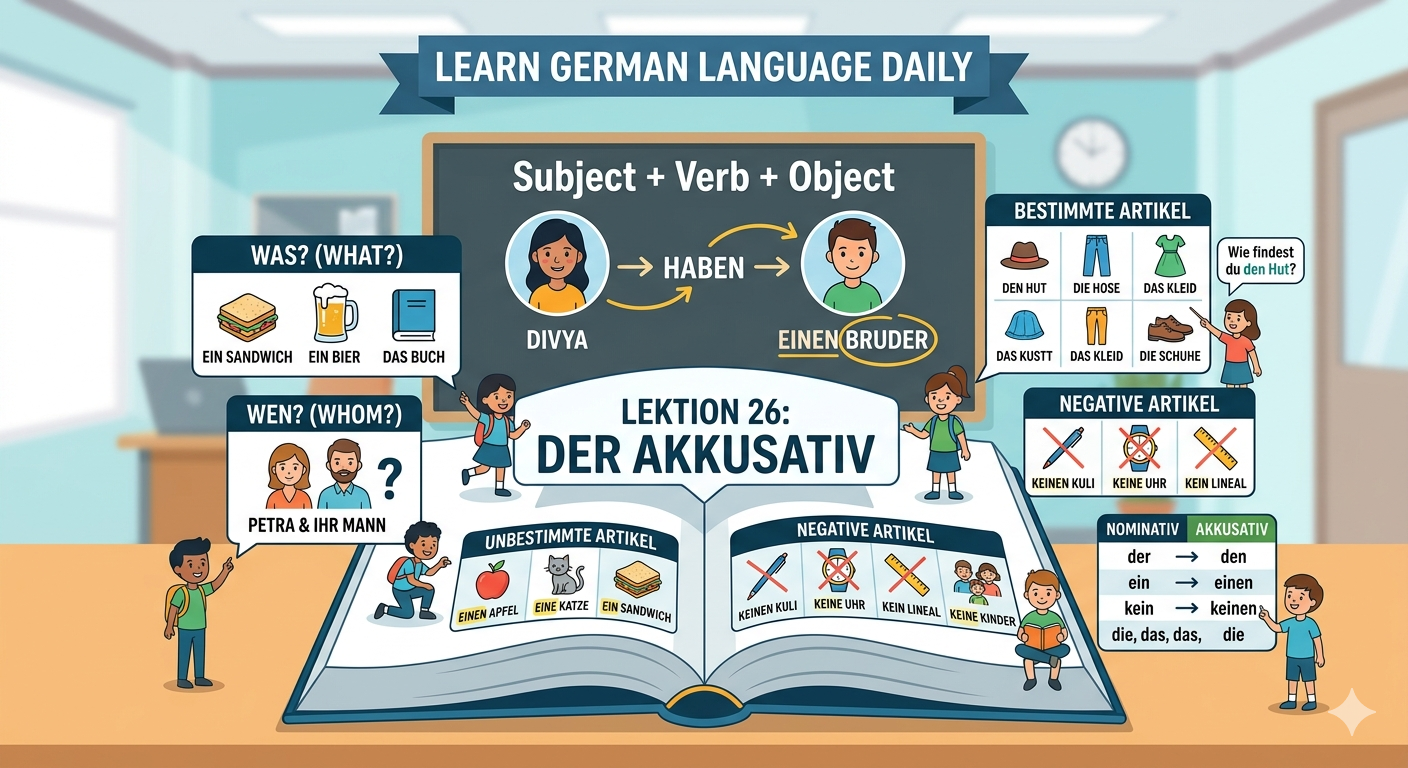
Negative Artikel im Nominativ
Here’s the overview:
| Gender | Singular | Plural |
|---|---|---|
| Maskulin | kein | keine |
| Feminin | keine | keine |
| Neutrum | kein | keine |
Comparison of All Three Article Types
| Gender | Bestimmte Artikel (definite) | Unbestimmte Artikel (indefinite) | Negative Artikel |
|---|---|---|---|
| Maskulin | der | ein | kein |
| Feminin | die | eine | keine |
| Neutrum | das | ein | kein |
| Plural | die | – (no article) | keine |
Extra Information 📝
- No plural for indefinite articles
- You cannot say “eine Blumen”. For plural, just use the noun or add einige (some).
- Example: Das sind Blumen. (These are flowers.)
- But negative plural exists
- You can say: Das sind keine Blumen. (These are not flowers.)
- Adjective endings follow “kein”
- Just like with ein/eine, if you add an adjective, the ending depends on gender and case.
- Example:
- Das ist kein roter Apfel. (This is not a red apple.)
- Das ist keine schöne Blume. (This is not a beautiful flower.)
- kein vs. nicht
- kein/keine is used before nouns.
- nicht is used to negate verbs, adjectives, or whole sentences.
- Example:
- Das ist kein Buch. (This is not a book – noun negation)
- Das ist nicht groß. (This is not big – adjective negation)
Quick Recap
- Use kein/keine to say “not a / not any”.
- kein = masculine + neuter singular
- keine = feminine singular + all plurals
- Negative articles behave like indefinite articles (ein/eine) but with “k-”.
- Don’t confuse kein with nicht – they have different jobs!
✅ With this, you can confidently say things like:
- Das ist kein Hund. (This is not a dog.)
- Das ist keine Lampe. (This is not a lamp.)
- Das ist kein Auto. (This is not a car.)
- Das sind keine Bücher. (These are not books.)









Leave a Reply